
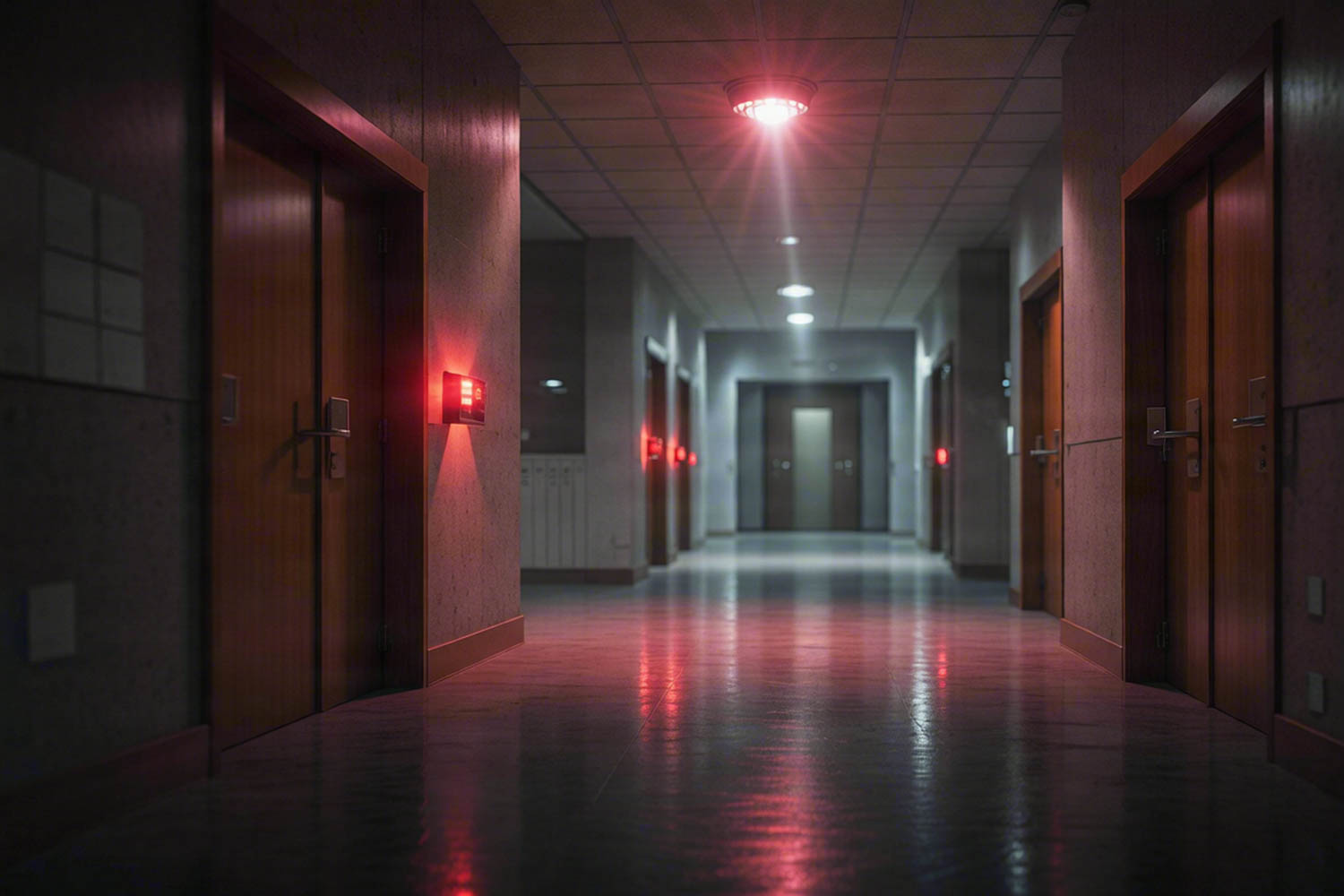
With growing concerns over campus security incidents globally, establishing rapid lockdown protocols has become essential for protecting students, faculty, and administrative staff during critical events. Educational institutions around the world are re-evaluating their safety infrastructure—and here in Southern Ontario, proactive risk management is no longer optional. Whether you are managing a private academy in Midtown Toronto or a sprawling post-secondary facility in Mississauga, coordinating physical classroom door hardware with centralized alarm systems transforms passive security into an active, automated defense network.
At our core, we design and install comprehensive security solutions customized to fit the exact operational needs of your facility and your administrative environment. By integrating localized access management hardware directly with site-wide panic triggers and notification systems, educational institutions can drastically reduce response times when every second counts.
The Core Components of an Integrated Campus Defense
An effective lockdown framework relies on multiple security layers communicating instantly back to a central control hub.
Localized Access Control
Modern campus access management moves away from physical brass keys—which are easily lost or slow to turn during high-stress events—to digital access systems.
- Card Reader Access Panels: Installed directly at classroom doors, administrative offices, and main entrances, card reader access panels allow authorized staff to lock down individual rooms or entire wings instantly with a single keycard swipe or mobile phone credential.
- Biometric & Facial Recognition Checkpoints: At high-security perimeter doors or faculty areas, face recognition access control ensures that only verified staff members gain access without needing physical cards that could fall into the wrong hands.
Centralized Emergency Alarms and Panic Triggers
When a critical threat is identified, administrative personnel require immediate site-wide activation controls.
- Integrated Emergency Solutions: Wall-mounted panic buttons, under-desk triggers, and centralized monitoring stations—ideal for colleges, universities, private schools, and daycare centers—allow staff to initiate site-wide lockdowns without delay.
- High-Decibel Sound Devices & Visual Alerts: Once triggered, high-output sound devices and flashing strobe lights sound throughout hallways, cafeterias, and exterior grounds to notify everyone on site of an active protocol.
- Digital Video Surveillance System: High-definition security cameras integrated with the lockdown panel feed real-time visual verification directly to first responders and campus security personnel.
How Connected Security Products Execute Rapid Lockdown Protocols
The moment an emergency is declared, isolated security components must act as a single, coordinated defense grid. Here is how these integrated technologies execute in real-time local applications:
- Phase 1: Trigger Central panic button or mobile administrative alert is activated.
- Phase 2: Warning Site-wide sound devices and visual strobe lights activate instantly across campus.
- Phase 3: Isolation Card reader access panels lock all classroom exterior handles automatically to block unauthorized entry while ensuring immediate egress capability from inside.
- Phase 4: Monitoring Digital video surveillance systems route live camera feeds directly to emergency responders and campus security personnel.
Comparing Campus Security Models
Understanding how different access models perform during an active incident highlights the advantage of automated digital systems over traditional manual methods.
| Security Feature | Traditional Manual Locks | Isolated Digital Security | Integrated Campus Network |
| Lockdown Speed | Minutes (requires manual key turning) | Seconds (per room/wing) | Instantaneous (campus-wide) |
| System Activation | In-person at the door handle | Local control panel | Central button, keycard, or mobile app |
| First Responder Data | None | Limited local logs | Live video feeds & door status maps |
| Access Control | Physical keys (vulnerable to loss) | Keycards / PINs | Card readers & face recognition access control |
How Toronto and GTA Campuses Apply These Systems Every Day
Educational facilities throughout Toronto and the GTA face unique campus layouts—from dense urban high-rises along Bloor Street to multi-building suburban campuses in York Region.
- Private K-12 Academies: Combining street-level multi-tenant video entry at front reception with automatic door locks allows administrative staff to screen visitors visually while keeping classrooms permanently secured against unexpected walk-ins.
- Post-Secondary Satellite Campuses: High-traffic environments pair digital & metal detector security gates at main concourse entrances with localized card reader access panels on lecture hall doors to manage thousands of student movements without compromising emergency preparedness.
- Specialized Health & Nursing Labs: Higher-education medical training centers integrate bi-spectral infrared body temperature fast screening instruments and wrist temperature measurement systems alongside standard card readers to maintain both health protocols and restricted room entry.
Recommending the Best Strategy for School Administrators
To build a reliable campus security framework that satisfies risk management compliance and protects lives, we recommend a phased strategy:
Phase 1: Establish Automated Access Control
Replace traditional mechanical locks on all classroom doors with credentialed card reader access control systems. Ensure hardware features intuitive indoor egress handles so students and teachers can exit quickly in fire scenarios while staying locked against outside threats.
Phase 2: Centralize Emergency Alarms
Install dedicated emergency solutions—including hardwired panic buttons at administrative desks and main security booths—directly connected to site-wide sound devices and public address systems.
Phase 3: Integrate Video Surveillance for First Responders
Link every door contact and lockdown trigger to a centralized digital video surveillance system. When an alarm trips, local law enforcement and campus safety officers should immediately receive live video access to locate threats and verify safe zones.
Protect Your Campus Today: Let’s Build Your Emergency Strategy
Navigating institutional safety requirements does not have to be overwhelming. As a local security provider serving Toronto and the Greater Toronto Area, we take the time to inspect your facilities, identify security gaps, and engineer custom solutions tailored to your campus layout and administrative budget. From initial installation to ongoing maintenance and system testing, our local specialists ensure your emergency response network is ready when you need it most.
Implementing robust rapid lockdown protocols is the single most effective step toward protecting your students and staff. Call our local GTA team today at (416) 498-9597 to request a quote or schedule an on-site consultation for your institution.